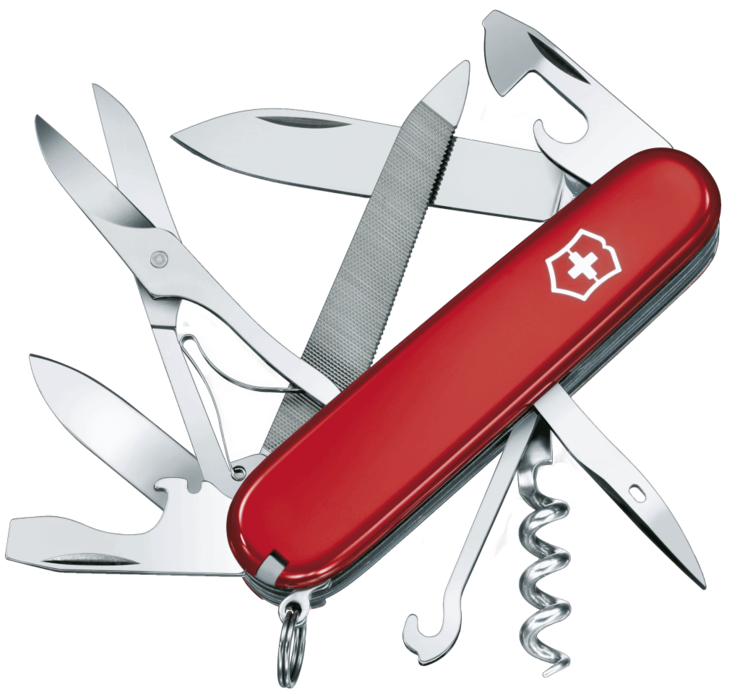
Crisis is an integral part of the life cycle of an entrepreneur. It is only a matter of time before such a period occurs and how one will recover from it. How long an enterprise will survive in a crisis depends on how much reserve money it has set aside. A clear example of this is the Swiss manufacturer of pocket knives Victorinox and Wegner.
September 11, 2011 was recognized as the most difficult day in the Swiss Army Knife industry. This day is known internationally as the "Original Swiss Army Knife". The reason is that after the attacks on the Pentagon and the World Trade Center and the hijacking of airplanes, pocket knives were banned on airplanes for one day, as airport security standards became too strict and passengers had to refuse to take such small items with them, which in many cases were purchased at the airport before the flight. Thus, Victorinox knives disappeared from Duty Free stores worldwide and this sales channel for the manufacturer disappeared. The manufacturer's warehouses were filled with returned products. Many manufacturers did not even consider other sales channels.
As a result, both major pocket knife manufacturers, Victorinox and Wenger, saw their turnover drop by a third.
Due to the current situation, Wenger's firm had to reduce its staff from 280 to 140. The remaining employees were also transferred to part-time positions.
Victorinox, Europe's largest knife manufacturer, faced similar challenges, but managed to retain jobs, even though the company generated 70% of its revenue from pocket knives. How did it manage to retain jobs in the face of such a breakthrough?
Victorinox always saved money for a rainy day. It kept a large part of its profits in reserve rather than spending the surplus money in good times on expanding structures and jobs that would have been eliminated in times of trouble.
So, thanks to flexible diversification on September 11, Victorinox was able to adapt to the challenges of the future and add new directions, such as the production of watches and travel bags.
On the other hand, overtime hours were cut. Employees were reassigned to different departments. During the difficult period, employees even used the following year's one-week vacation to work. Not a single employee was laid off. On the contrary, the HR manager had to temporarily hire several employees from another company to handle large orders.
The firm immediately used the reserve money to explore and advertise new markets in Asia and South America. This strategy paid off. By diversifying into new directions, the firm managed to double its turnover the following year.
Since then, the company has prioritized the provision of guaranteed jobs. Victorinox has established a fund that holds 90% of the company’s share capital. The fund’s purpose is to limit shareholders from taking large dividends and to protect the company from conflicts between heirs. All this creates the necessary conditions for setting aside large reserves in the future, which will help to avoid layoffs during economic downturns.
As for Wenger, the events of September meant the end for him. In 2005, the firm declared itself insolvent and was in danger of being sold. Victorinox took over a part of it to protect it from foreign investors. It managed to do this with the help of reserves.
Reserves are also vital for Georgian small and medium-sized enterprises. Learn how to properly analyze risks, manage them, and use reserves with the help of coaching and seminars from the Swiss foundation BPN. For more information, see www. bpngeorgia.ge