
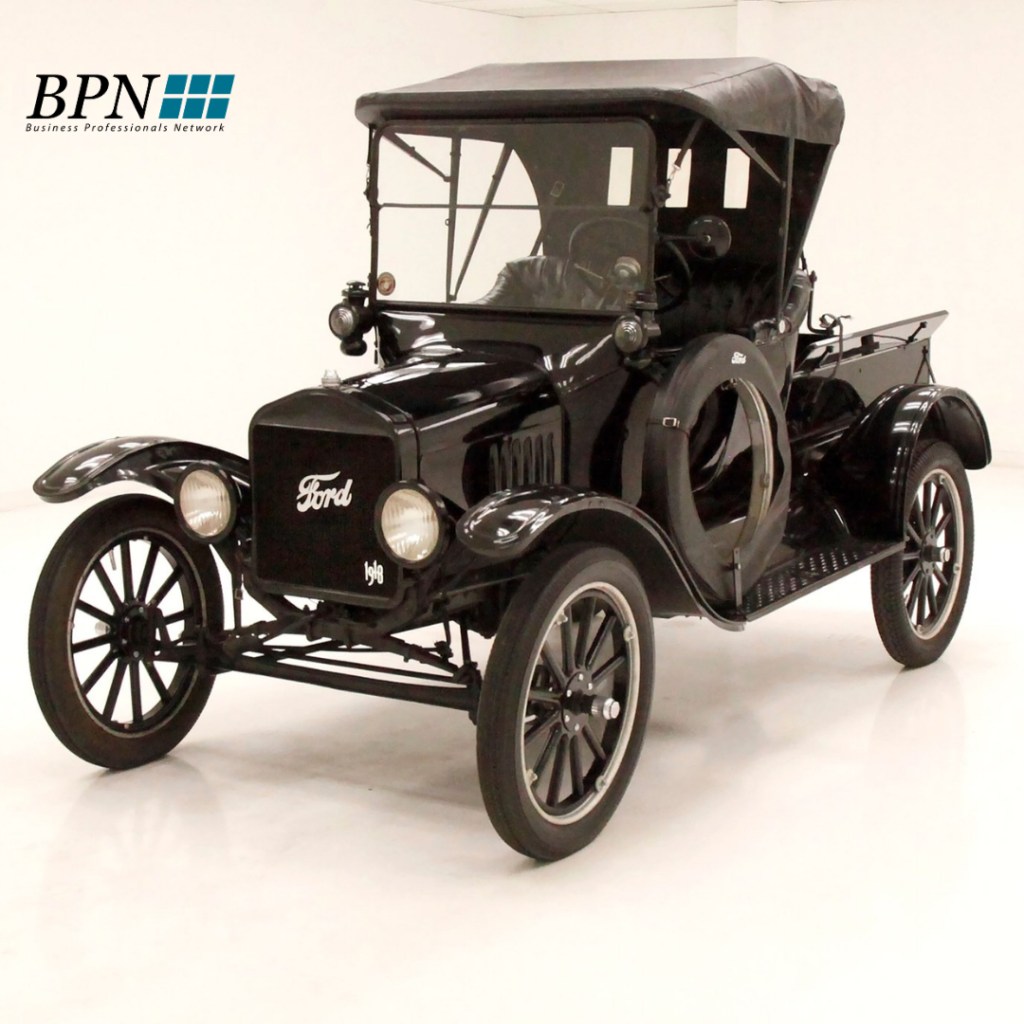

Henry Ford (1863 – 1947) – American businessman. Born into a large family of an ordinary farmer. At the age of 15, he built his first tractor and used it on his father’s farm. Later, he moved to the city and worked as an engineer for the Edison company. Later, together with his partners, he founded the Detroit Automobile Company and in 1893 created the first car, which was put on sale in 1903 for $ 950. The proceeds were used to produce subsequent cars. By 1908, 100 cars were already being produced per day. The price also decreased and amounted to $ 400, which made the product affordable for the masses. Ford wanted to increase production at the expense of reinvesting the money he earned, which was why he encountered resistance from his partners, who wanted to share the profits. This became the reason for Ford’s departure from the company and the founding of the Henry Ford Company.
Ford achieved his vision of mass production of cars at an affordable price by introducing the assembly line system into production. He also revolutionized the lives of the working class. He reduced working hours from 9 to 8 hours. He raised wages from $3 to $5 a day. He achieved greater productivity by properly distributing and coordinating work. In order to create integrated production, which meant production, assembly, and transportation within the framework of one company, he acquired his own railroads, fleet, mines, and forests to ensure the production and transportation of raw materials needed for the auto industry on his own base. All this without debt, at the expense of reinvesting the profits from sales of the Model T cars.