

"There are three things extremely hard: steel, a diamond, and to know one's self."
Benjamin Franklin

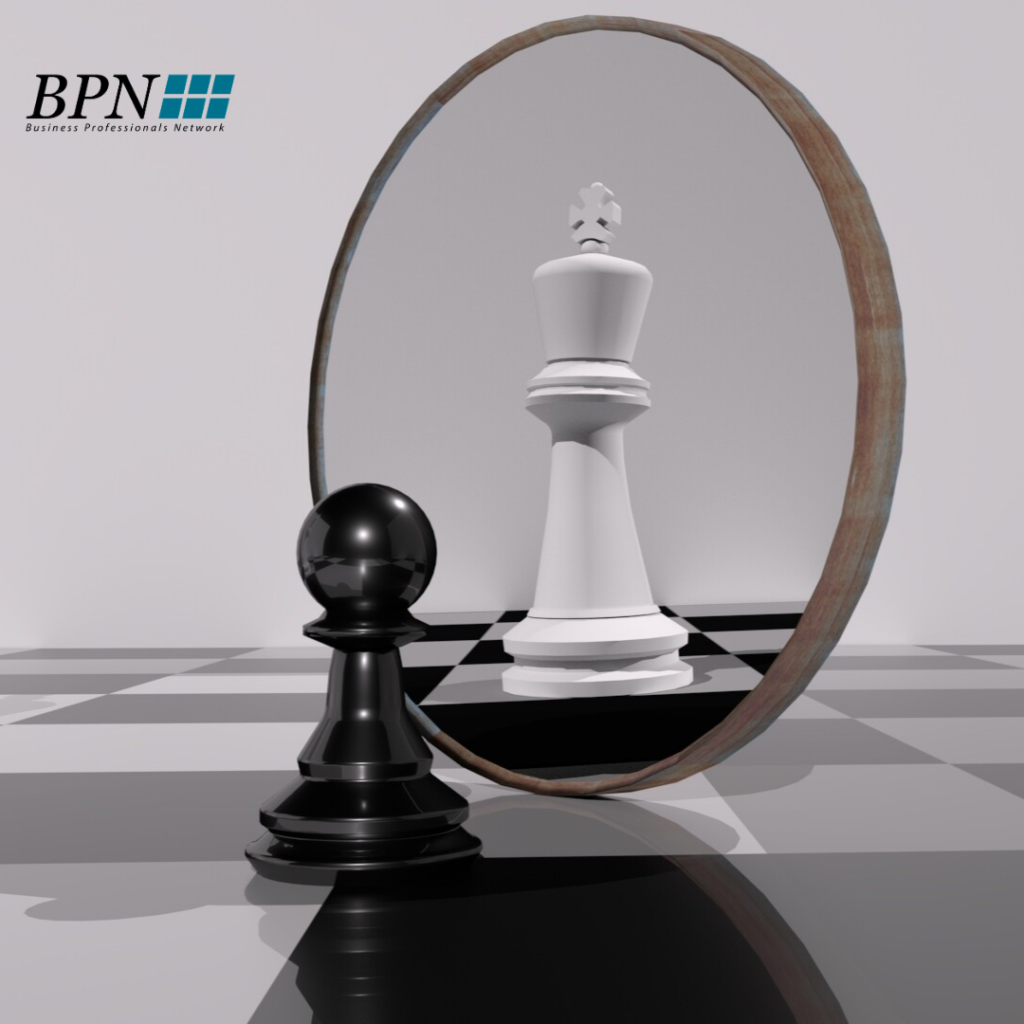
What do you see in the mirror – reality in the form of a cat, or your overestimation of yourself in the form of a lion?
In psychology, “self-image” is the idea that a person has of themselves. Each of us has a picture of our own strengths and weaknesses. This self-image, or self-image, influences how we behave and relate to others. At the same time, self-image is firmly based on our ideal/desired image of who we want to be.
On the other hand, external image is the image that others create of us. It consists of the perceptions, evaluations, and feelings that others have towards us.
In reality, self-image and external image almost never match, because we all have character traits that we cannot and do not want to perceive. In psychology, this is called a blind spot.
If a manager values themselves differently than their employees perceive them, this often leads to conflicts and misunderstandings within the company.
This situation is not uncommon in reality. A study conducted by the German research institute Allensbach showed that there is a somewhat large gap between how German leaders perceive themselves and how others perceive them.
At this time, among other things, the following questions were asked to managers and employees directly subordinate to them:

The responses of managers and employees revealed a significant discrepancy between self-perception and external image on the part of management:
- 70% of managers were confident that they communicated clearly to employees about changes in the workplace, but only 38% of employees agreed with this view.
- About 84% of managers said they usually stuck to agreements and decisions reached during negotiations and did not change their minds, but only 55% of employees felt the same.
- About 67% of managers said they were open to criticism. In contrast, only 38% of employees acknowledged that managers were open to criticism.
- About 52% of managers believed that they provided direction and long-term perspectives to their employees. However, only 29% of employees confirmed this statement.
How is it possible that many bosses see themselves as supermen, while their employees view them as the opposite?
There are many reasons for this:
- On the one hand, this is certainly related to the fact that very few managers regularly receive honest evaluations from their employees, and thus have little chance to compare their own and others' perceptions. Employee surveys are usually conducted routinely, without an honest exchange of views.
- Some leaders lack the necessary self-reflection and pride themselves on only talking about their own weaknesses.
- The company has a culture of fear: mistakes and weaknesses are deliberately covered up. Employees are afraid of losing their jobs if they give negative feedback.
Good management involves self-reflection and feedback!
First, a good manager can manage himself. Without the ability to manage himself, it is impossible to successfully manage employees. Self-management involves reflective self-observation and the ability to change perspective: you have to deal with the image that employees have of you. Only in this way can you adapt your management style to the expectations of employees.
So always ask others for feedback when you have the opportunity. This way you will gain information about yourself that you may not have been aware of before. The more of this type of unfamiliar information you receive, the smaller your blind spot will become.
Establishing a constructive culture of mistakes!
We all make mistakes. Every manager has weaknesses. Once a company embeds this knowledge into its corporate culture, a healthy self-perception can be formed, according to which neither the boss nor the employees are perfect. If you can spread the idea among your employees that weaknesses are not evidence of imperfection, but rather a motive for joint learning and acquiring more knowledge, then you will win!